
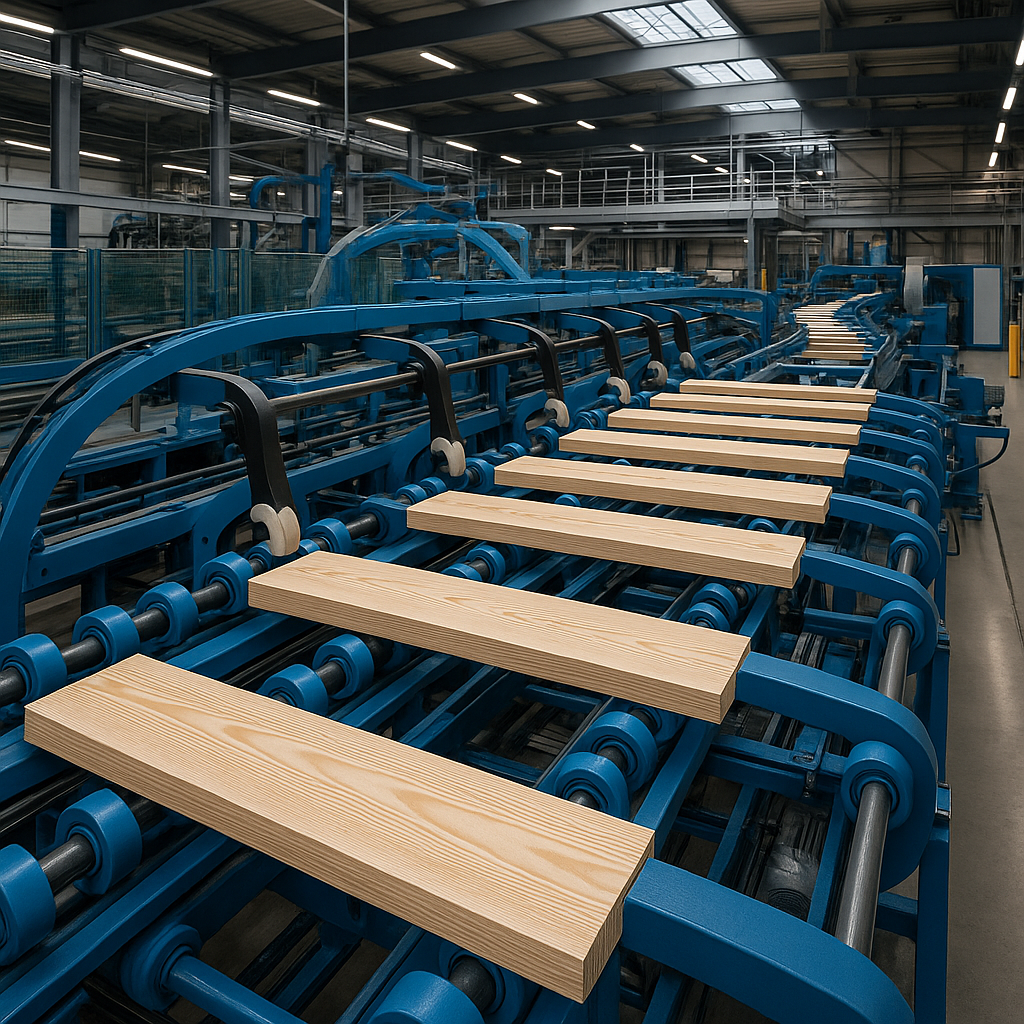
Efficient lumber handling conveyors streamline material flow, reduce manual labor costs, and optimize production throughput in modern sawmill operations.
Understanding Conveyor Systems in Sawmill Material Handling
Conveyor systems serve as the foundational infrastructure for material flow in sawmill operations, transporting lumber, slabs, and wood products through various processing stages. These systems encompass multiple mechanical, electrical, and control components that work together to move materials efficiently from one workstation to another. In modern sawmill facilities, conveyors reduce manual handling requirements, minimize worker exposure to heavy materials, and maintain consistent production flow rates throughout the milling process.
The operational scope of sawmill conveyor systems extends beyond simple material transport. They integrate with cut-off saws, cant sizers, scragg mills, and stacking equipment to create continuous production lines. Properly designed conveyor configurations accommodate varying lumber dimensions, handle both green and dried wood products, and manage debris removal alongside finished materials. Understanding the mechanical principles, load capacities, and integration requirements of these systems enables operators to select appropriate conveyor solutions that align with facility layout constraints and production volume targets.
Material handling conveyors in sawmill environments must withstand demanding operational conditions including wood chips, sawdust accumulation, moisture exposure, and continuous heavy loads. The selection process requires careful analysis of material characteristics, transport distances, elevation changes, and throughput requirements. Facilities benefit from conveyor systems that incorporate adjustable speed controls, configurable widths to accommodate different lumber sizes, and modular construction that permits future expansion or reconfiguration as production needs evolve.
Key Conveyor Types for Lumber Processing Facilities
Chain conveyors represent a primary solution for heavy-duty lumber transport in sawmill operations. These systems utilize steel chains with attached slats or flights to move lumber products across horizontal and inclined planes. Chain conveyors excel at handling rough-sawn lumber, cants, and dimensional lumber with varying moisture content and weight characteristics. The robust construction of chain-driven systems provides reliable performance in high-volume operations where durability requirements exceed lighter-duty alternatives. Maintenance personnel appreciate the straightforward mechanical design that facilitates inspection and component replacement during scheduled maintenance intervals.
Roller conveyors offer versatility for moving finished lumber products through sorting, grading, and stacking operations. These systems employ a series of cylindrical rollers mounted on a frame, with power transmission achieved through belt drives, chain drives, or individual motorized rollers. Roller conveyors minimize surface damage on finished lumber while accommodating variable piece lengths and widths. The modular configuration permits customization to specific facility layouts, including curved sections, accumulation zones, and integration points with automated sorting equipment. Operators benefit from adjustable roller spacing that accommodates different product dimensions without requiring extensive reconfiguration.
Belt conveyors provide continuous material transport for smaller wood products, wood chips, and sawdust removal applications. These systems utilize endless belts supported by idler rollers and driven by motorized pulleys. Belt conveyors handle inclined transport effectively, making them suitable for moving materials between different elevation levels within the facility. The smooth belt surface reduces product damage and facilitates cleanup of accumulated debris. Modern belt conveyor designs incorporate features such as adjustable tracking systems, quick-release belt tensioning, and modular construction that simplifies maintenance procedures and extends operational service life in demanding sawmill environments.
Integration Considerations for Conveyor Systems in Production Lines
Successful conveyor integration requires comprehensive planning that accounts for existing equipment, facility layout constraints, and production workflow patterns. The conveyor system must interface mechanically and electrically with upstream and downstream equipment including saws, stackers, and sorting stations. Proper alignment between conveyor discharge points and receiving equipment prevents material jams and maintains continuous flow. Integration planning should address material transfer points, accumulation zones for buffering between processes with different cycle times, and emergency stop circuits that halt all connected equipment when safety conditions require intervention.
Control system integration enables coordinated operation of multiple conveyors and processing equipment through centralized operator interfaces. Modern sawmill operations benefit from programmable logic controllers that manage conveyor speeds, sequencing logic, and material tracking throughout the production line. Single-operator control configurations reduce labor requirements while improving response times to production variations and equipment conditions. The electrical integration must provide appropriate motor control, variable frequency drives for speed adjustment, and sensor feedback for material detection and jam prevention. Properly implemented control strategies optimize material flow, minimize gaps between pieces, and maximize overall system throughput.
Physical space constraints and structural support requirements significantly influence conveyor system design and installation. Conveyors must fit within available floor space while providing adequate clearance for maintenance access and operator safety zones. Structural engineering analysis determines foundation requirements, support framing specifications, and load distribution considerations for elevated conveyor sections. The integration plan should account for utility connections including electrical power, compressed air for pneumatic controls, and dust collection interfaces. Facilities planning future expansion benefit from conveyor designs that incorporate connection points and structural provisions for additional sections without requiring extensive modifications to existing installations.
Durability and Maintenance Requirements for Heavy-Duty Conveyor Applications
Conveyor durability in sawmill environments depends on robust construction using materials that withstand continuous exposure to moisture, wood resins, and mechanical wear. Heavy-duty frame construction utilizing structural steel components provides stability under dynamic loads and resists deflection during operation. Chain components, sprockets, and bearing assemblies must meet specifications for load capacity and wear resistance appropriate to the application demands. Surface treatments and protective coatings extend component life by reducing corrosion from moisture exposure and chemical interactions with wood preservatives. Operators recognize that initial investment in durable construction reduces long-term maintenance costs and minimizes unplanned downtime events that disrupt production schedules.
Preventive maintenance programs establish routine inspection and servicing intervals that identify wear conditions before failure occurs. Maintenance personnel monitor chain tension, sprocket wear patterns, bearing temperature and vibration signatures, and belt tracking alignment during scheduled inspections. Lubrication systems require regular attention to maintain proper chain and bearing lubrication in dusty sawmill environments where contamination can compromise lubricant effectiveness. The maintenance program should include procedures for debris removal, structural inspection, and electrical connection verification. Facilities that maintain detailed service records can identify patterns in component wear that inform improvements to operating procedures or justify upgrades to more durable component specifications.
Access provisions and modular component design significantly influence maintenance efficiency and downtime duration during repairs. Conveyor systems designed with maintenance considerations incorporate removable guard panels, chain access sections, and standardized fastener specifications that reduce tool requirements and changeover times. Quick-release tensioning mechanisms permit rapid belt or chain adjustment without extensive disassembly. Spare parts inventory management ensures critical components remain available for emergency repairs without requiring extended lead times from suppliers. Maintenance training programs familiarize personnel with proper service procedures, safety lockout protocols, and troubleshooting methods that restore equipment to operation efficiently while maintaining workplace safety standards throughout the maintenance process.
Optimizing Production Efficiency Through Automated Material Handling
Automated material handling systems reduce labor costs by eliminating manual transport tasks and enabling single-operator management of complete production lines. Conveyor systems with integrated sensors and control logic automatically route materials to appropriate processing stations, accumulation areas, or sorting positions based on programmed parameters. This automation reduces handling time per piece, increases throughput capacity, and improves consistency in material presentation to downstream equipment. Facilities implementing automated material handling report measurable improvements in production rates while simultaneously reducing workplace injury risks associated with manual lumber handling operations.
Production throughput optimization requires careful analysis of bottleneck points, material flow rates, and equipment cycle times throughout the processing line. Conveyor speed adjustments, accumulation zone sizing, and buffer capacity allocation influence overall system performance. Variable frequency drives enable dynamic speed matching between adjacent conveyor sections and processing equipment to maintain optimal material spacing and prevent gaps that reduce throughput efficiency. Data collection from production monitoring systems identifies opportunities for process improvements, validates the effectiveness of operational changes, and supports decisions regarding equipment upgrades or expansion projects. Operators utilize this information to fine-tune conveyor speeds, adjust material flow patterns, and maximize utilization of installed equipment capacity.
Energy efficiency considerations influence conveyor system design and operation strategies in modern sawmill facilities. Motor sizing appropriate to actual load requirements avoids excessive energy consumption from oversized drives. Variable frequency drives reduce energy usage by operating conveyors at speeds matched to current production demands rather than continuous full-speed operation. Zoned conveyor controls shut down sections not actively transporting material, further reducing electrical consumption during production gaps or partial-line operation. Maintenance practices that address bearing wear, chain tension, and alignment issues prevent increased friction loads that elevate energy requirements. Facilities implementing comprehensive efficiency strategies achieve measurable reductions in operating costs while maintaining or improving production output levels through optimized automated material handling systems.